Ayurvedic Treatment for Gallstones (Pittashmari / पित्ताशय की पथरी)
Pittashmari (Gallstones) Treatment Summary
Ayurveda treats gallbladder stones (Pittashmari) by balancing Pitta-Kapha doshas and using litholytic herbs to improve bile solubility. At Vedacare Pune, we offer non-surgical care to dissolve stones (up to 20mm) naturally through specialized ayurvedic formulas and Panchakarma, preserving gallbladder function.
- Ayurvedic Treatment for Gallstones (Pittashmari / पित्ताशय की पथरी)
- Pittashmari (Gallstones) Treatment Summary
- Ayurvedic Perspective on Gall stones
- Can Gallstones Be Treated Naturally in Ayurveda?
- What Are Gallbladder Stones?
- What Are Gallstones in Ayurveda?
- Types of Gallstones Chart
- Symptoms and Signs of Gallbladder Stones (Cholecystitis)
- Why Choose Ayurveda for Gallbladder Stones?
- How Does Ayurvedic Gallstone Care Differ from the Conventional Approach?
- Causes of Gallbladder Stones:
- Gallstones vs Kidney Stones
- Side Effect of Gallbladder Removal:
- Vedacare Ayurved vs. Surgical Removal
- The Science of Litholytic Action: How Ayurveda Dissolves Stones.
- Ayurvedic Treatment for Gallbladder Stones:
- Is the Same Gallstone Treatment Suitable for Everyone?
- Why Gallstones Cause Pain After Eating Fatty Foods
- Why Does Ayurvedic Treatment for Gallstones Take Time?
- When Immediate Surgery May Be Necessary
- What Is the Best Ayurvedic Diet for Gallstones?
- Common Questions About Gallstones
- Can Ayurveda actually dissolve gallbladder stones?
- Is surgery mandatory for all cases of gallstones?
- How long does the Ayurvedic treatment take to show results?
- What is the maximum stone size that can be treated non-surgically?
- Can gallstones recur after Ayurvedic treatment?
- Are there any side effects of Ayurvedic gallbladder medicines?
- What are the key dietary restrictions during treatment?
- Where can I get specialized gallstone treatment in Pune?
- Why Not Delay the Gallstone Treatment?
- Why Choose Vedacare for Gallstone Treatment in Pune?
- Clinical observations commonly seen during gallstone management
- Summary of Ayurvedic Treatment for Gallstones
Ayurvedic Perspective on Gall stones
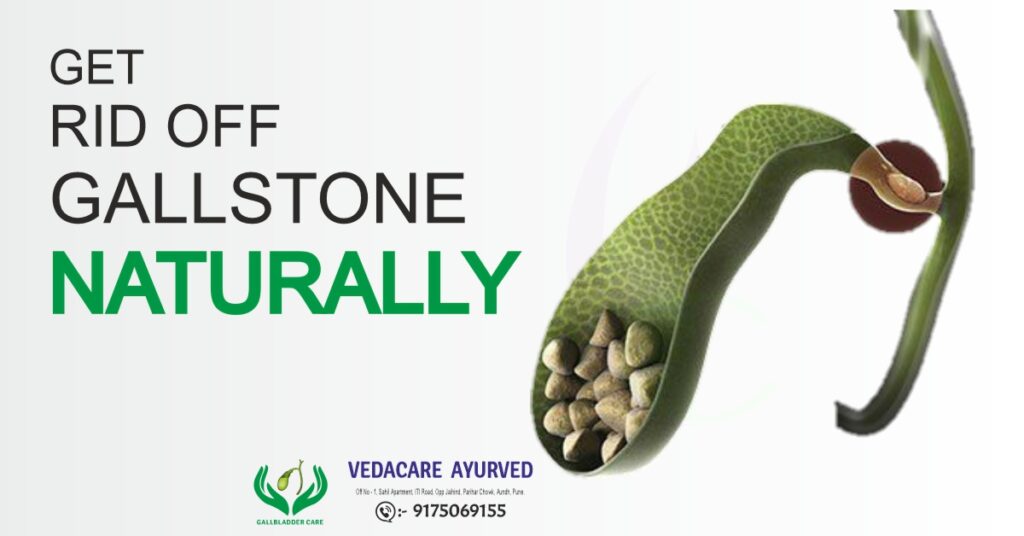
In Ayurveda, gallbladder stones are known as Pittashmari. They occur when aggravated Pitta and Kapha doshas cause bile to solidify. Vedacare Ayurved utilizes specific herbs traditionally known for their litholytic properties, alongside Pitta-balancing therapies and Panchakarma. These aim to support the body’s natural ability to break down stones, improve bile solubility, and restore overall liver health.
In Ayurveda Pittashay Khade, are hardened deposits of digestive fluid that form in the gallbladder, a small organ beneath the liver. These stones, ranging from sand-grain size to golf-ball size, can cause significant discomfort and serious complications if untreated. While surgery (cholecystectomy) is a common modern solution, it may lead to lifelong digestive issues. Ayurveda offers a safe, natural, and holistic approach to dissolve stones, preserve gallbladder function, and prevent recurrence.
Can Gallstones Be Treated Naturally in Ayurveda?
Yes, Ayurvedic treatment for gallstones (Pittashay Khade) focuses on dissolving stones naturally using herbs, Panchakarma therapies, and diet changes while preserving gallbladder function.
What Are Gallbladder Stones?
Gallstones (Pittashmari) develop when the liver produces bile that is too heavy in cholesterol or bilirubin, causing it to harden inside the biliary tract. Ayurveda addresses this by targeting the root dosha imbalance. These stones vary in size, from as small as a grain of sand to as large as a golf ball and can be singular or multiple.
Gallstones vary in size (1mm to >3cm) and number, with some individuals having a single stone, others multiple, and some having biliary sludge (slurry). They are more prevalent in women, adults over 40, and those with risk factors like rapid weight loss or pregnancy.
Let’s see how it forms
- Dietary Factors: Heavy, fatty, or processed foods impair Agni (digestive fire), leading to Ama (toxins) that contribute to stone formation.
- Dosha Imbalance: Excess Pitta (heat) from spicy, oily, or acidic foods, combined with Kapha’s sticky nature, leads to bile thickening. Vata may cause dryness or obstruction, reducing bile flow.
- Lifestyle Factors: Sedentary habits, irregular eating, or suppressed emotions (e.g., anger, a Pitta emotion) aggravate Pitta and stagnate bile.
- Result: Bile components like cholesterol or bilirubin precipitate, forming stones ranging from small gravel to large calculi.
Gallstones can often be managed without surgery using Ayurvedic treatment that focuses on Bile Solubility for dissolving stones and preventing recurrence naturally.
What Are Gallstones in Ayurveda?
According to Charaka Samhita, gallstones result from excessive Pitta (heat and bile) combining with Kapha’s sticky nature, leading to bile crystallization. Vata contributes by causing dryness or obstruction, reducing bile flow. The types of gallstones in Ayurveda are categorized based on dosha predominance:
- Pitta-Dominant Pittashmari: Cholesterol-based stones, yellow-green, linked to excess heat from spicy or fatty foods.
- Kapha-Dominant Pittashmari: Pigment stones, darker, caused by sluggish digestion and toxin (Ama) buildup.
- Mixed Pittashmari: Combination of cholesterol and bilirubin, reflecting complex dosha imbalances.
This Ayurvedic understanding guides personalized Ayurvedic treatment for gallstones, focusing on restoring dosha balance and enhancing bile flow.
Types of Gallstones Chart
Gallstones are classified into two main types:
- Cholesterol Stones (80% of cases): Formed due to excess cholesterol in bile, often linked to high-fat diets, obesity, or diabetes.
- Pigment Stones: Composed of excess bilirubin, associated with liver conditions or blood disorders.
| Type | Description | Composition | Frequency |
| Cholesterol Stones | Yellow-green stones made mostly of cholesterol | Excess cholesterol in bile | ~80% |
| Pigment Stones | Dark-colored stones | Excess bilirubin | ~20% |
| Mixed Stones | Combination of both | Cholesterol + bilirubin | Less common |
Key Facts About Gallstones
- Prevalence: More common in women, adults over 40, and those with obesity or diabetes.
- Risk Factors: High-fat diets, rapid weight loss, pregnancy, and sedentary lifestyles, Obesity, high-fat diets, diabetes.
- Symptoms: May range from none (asymptomatic) to severe pain, nausea, or jaundice.
- Types: Cholesterol stones (80%), pigment stones (bilirubin).
Symptoms and Signs of Gallbladder Stones (Cholecystitis)
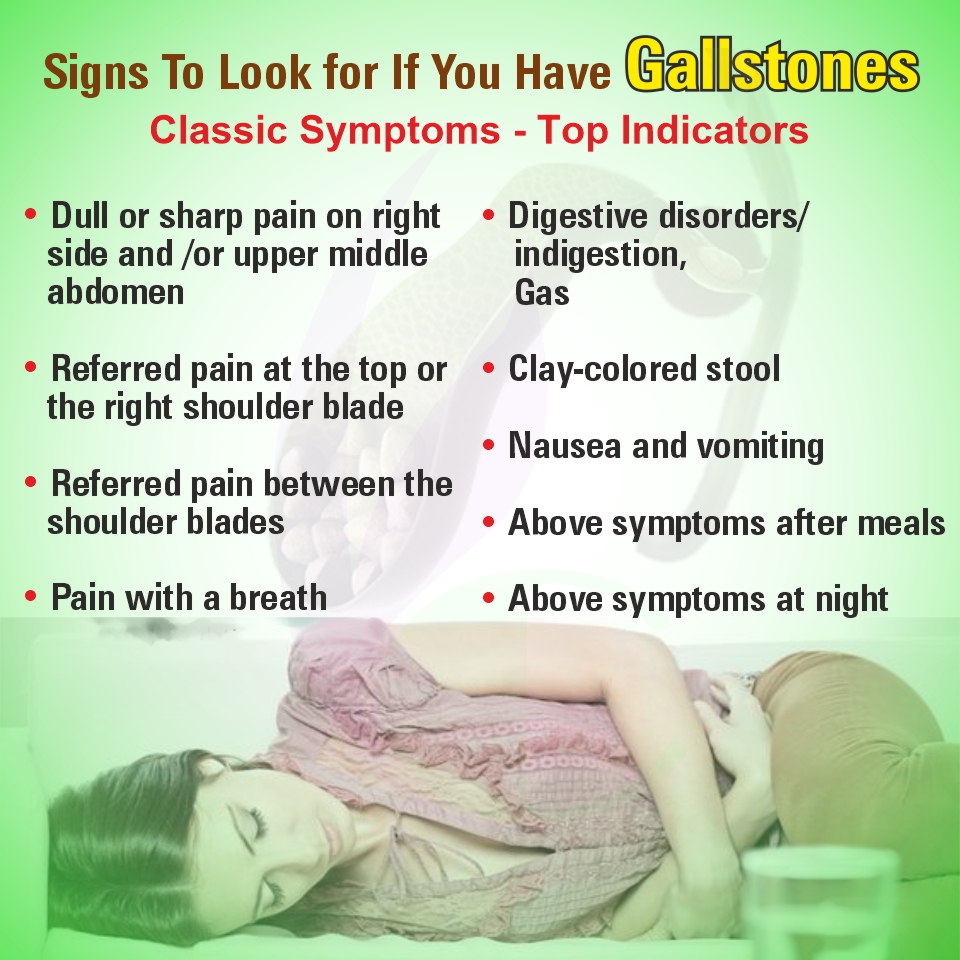
Gallstone symptoms vary widely. Some individuals experience no symptoms, while others face severe discomfort requiring immediate attention. Gallstone symptoms range from none (silent stones) to severe, requiring urgent care. Common symptoms include:
- Recurring pain under the right rib cage after eating.
- A persistent ache behind your right shoulder blade after eating.
- After eating a fatty meal, you may experience digestive upset such as pain, bloating and nausea.
- Right shoulder pain and swelling
- Vomiting and nausea
- A sharp pain in the upper right part of your abdomen.
- Ache between the shoulder blades
- Yellowing of the skin and whites of the eyes (jaundice)
- High fever accompanied by chills
- Other digestive issues, such as indigestion, heartburn, and gas
Save the gallbladder, Avoid Surgery, Stay Healthy
Untreated gallstones can lead to complications such as:
- Acute Cholecystitis: Gallbladder inflammation causing severe pain.
- Cholangitis: Bile duct infection.
- Pancreatitis: Pancreatic inflammation from blocked ducts.
- Gallbladder Cancer: Rare but linked to larger stones.
When to Seek Immediate Help:
- Intense abdominal pain that doesn’t subside.
- Pain in the abdomen that prevents you from sitting or getting comfortable.
- Skin turning yellow or eye discoloration (jaundice).
- Excessive vomiting or nausea that makes you unable to eat.
Why Choose Ayurveda for Gallbladder Stones?
Ayurveda focuses on treating the root dosha imbalances (Vata, Pitta, Kapha) rather than simply removing the organ. Surgery, while effective for emergencies, can cause chronic indigestion, diarrhea, or bile duct damage. Ayurvedic treatments aim to dissolve stones naturally and restore balance to the body. Ayurveda offers a gentler approach, preserving the gallbladder’s role in digestion.
न हि वातात् पित्तात् कफात् वा पुनर्भवेत् रोगः सम्यक् परीक्षितः। च.चि.
How Does Ayurvedic Gallstone Care Differ from the Conventional Approach?
Ayurveda emphasizes holistic healing, targeting the imbalance of doshas (Vata, Pitta, Kapha) that cause gallstones. Ayurveda views gallstones as Pittashmari (bile stones). According to the Charaka Samhita, a foundational Ayurvedic text, gallstones result from aggravated Pitta combining with Kapha to form sticky bile, which Vata then hardens into stones.
- Preserves Gallbladder: Ayurveda focuses on dissolving stones naturally without removing the gallbladder, an organ essential for fat digestion and bile regulation.
- Uses Safe, Natural Remedies: Unlike surgery, Ayurvedic treatments offer a gentle, natural way to eliminate stones without side effects.
- Promotes Holistic Health: Ayurveda customizes treatment based on individual constitution (Prakriti), lifestyle, and symptoms—offering holistic and long-lasting results. Addresses related issues like obesity or diabetes. Improves overall health, addressing related issues like obesity or diabetes.
- Reduces Recurrence: Lifestyle changes prevent future stones. Focuses on lifestyle changes to prevent future stones.
- Treats the Root Cause: Ayurvedic treatment addresses the underlying issues like Kapha-Pitta imbalance, impaired Agni (digestion), and toxin (Ama) buildup, reducing the risk of recurrence.
- Avoids Post-Surgical Complications: Gallbladder removal may cause indigestion, diarrhea, bile reflux, and nutrient absorption issues. Ayurveda helps prevent these by supporting natural bile flow.
- Long-Term Wellness: Along with dissolving stones, Ayurvedic care promotes overall liver and gallbladder health through diet, detoxification, and lifestyle guidance.
Causes of Gallbladder Stones:
Gallstones form due to:
- Excess Cholesterol in Bile: High-fat diets overwhelm bile’s ability to dissolve cholesterol.
- Excess Bilirubin: Liver or blood disorders increase bilirubin levels.
- Incomplete Gallbladder Emptying: Stagnant bile concentrates, forming stones.
Gallstones vs Kidney Stones
| Feature | Gallstones | Kidney Stones |
| Location | Gallbladder or bile ducts | Kidneys or urinary tract |
| Composition | Cholesterol, bilirubin | Calcium oxalate, uric acid, struvite |
| Density | Harder, denser | Softer, easier to pass |
| Symptoms | Abdominal pain, nausea, jaundice | Flank pain, blood in urine, frequent urination |
| Ayurvedic Cause | Pitta-Kapha imbalance, Vata hardening | Vata aggravation, Kapha accumulation |
| Treatment Time | Longer (due to density) | Shorter (softer stones) |
Side Effect of Gallbladder Removal:
Vedacare Ayurved vs. Surgical Removal
| Feature | Vedacare Ayurvedic Care | Surgical Removal (Cholecystectomy) |
|---|---|---|
| Method | Natural Stone Dissolution (Litholytic) & Root Cause Fix | Surgical Organ Removal |
| Organ Preservation | Yes – Gallbladder is Saved | No – Permanent Loss of Organ |
| Recovery Time | Immediate (No downtime or bed rest) | 2 to 4 Weeks Bed Rest |
| Digestive Impact | Improved Bile Flow & Liver Health | Risk of Chronic Indigestion, Diarrhea & Bloating |
| Long-term Results | Holistic Wellness & Better Digestion | Permanent Lifestyle & Diet Restrictions |
- Whatever food we eat must be digested. For digestion of food, it requires good digestive juices, and it needs a gallbladder to store good digestive juices. Removing the gallbladder causes continuous indigestion.
- Following gallbladder removal, you may experience loose or watery stools. Rerouting bile from the liver to the small intestine is required when a gallbladder is removed. Bile is less concentrated because it no longer passes through the gallbladder. The immediate effect is a laxative effect that can cause diarrhoea, but for most people, this will resolve on its own.
- Trouble in digesting food
- Infection of a wound
- Increasing discomfort
- Blood clot
- Bile leakage or bile duct damage
- Tissue or organ enlargement (Hernia)
- A fever and diarrhoea
- Damage to a blood vessel or the bowel
- Heart issue
The Science of Litholytic Action: How Ayurveda Dissolves Stones.
The primary challenge in non-surgical gallbladder stone management is reversing the Lithogenic Index of the bile. When bile becomes supersaturated with cholesterol and lacks sufficient bile salts or lecithin, crystallization occurs, leading to Pittashmari (Gallstones).
Ayurvedic treatment at Vedacare focuses on Litholytic Action—the chemical process of disintegrating calculi—through three specific pathways:
1. Modifying Bile Solubility
We use potent Bhedana (piercing) and Lekhana (scraping) herbs like Kutki (Picrorhiza kurroa) and Sharpunkha (Tephrosia purpurea). These botanicals act as natural choleretics, increasing the secretion of bile acids. By improving the cholesterol-to-bile-salt ratio, the bile returns to a liquid state, allowing it to act as a solvent that gradually dissolves the outer layers of existing cholesterol stones.
2. Enhancing Gallbladder Motility
Stagnant bile (Bile Stasis) is a precursor to stone formation. Specific herbo-mineral compounds stimulate the contraction of the gallbladder walls. This ensures that “sludge” or micro-crystals are flushed into the duodenum before they can aggregate into larger mass structures.
3. Hepatoprotective Detoxification
The liver is the “factory” of bile. Ayurvedic protocols including Virechan and herbs like Kalmegh (Andrographis paniculata) detoxify the hepatocytes. This ensures the production of “healthy bile” that is low in bilirubin and cholesterol saturation, preventing the recurrence of stones even after the existing ones have dissolved.
Ayurvedic Treatment for Gallbladder Stones:
It would certainly be more beneficial and wiser to rely on Ayurveda in such a case than to permanently cripple the digestive system by removing an important organ from the body at an unreasonable expense. Ayurvedic medicine can break down stones and eliminate them naturally through the bowel.
There is a common misconception that there is no cure for this disorder without surgery, but a large percentage of patients successfully manage or dissolve gallstones with medication. This can be a very big mistake if the operation is performed assuming that the medication is of no use.
Ayurveda treats gallstones by balancing doshas, cleansing the liver and gallbladder, and promoting bile flow. Ayurveda uses a multi-faceted approach to dissolve gallstones, including herbs, Panchakarma therapies, and dietary changes.
Herbal Medicines
- Turmeric: Choleretic, stimulates bile production, reduces inflammation.
- Kumari: Cholagogue, promotes gallbladder emptying.
- Tribulus terrestris: Dissolves stones, supports liver function.
- Nigella sativa: Antioxidant, reduces inflammation.
- Black pepper: Enhances bile flow.
- Milk Thistle: Detoxifies liver, shrinks stones.
- Artichoke: Stimulates bile production.
Vedacare Ayurved provides a holistic approach to treating gallbladder stones (cholelithiasis) using their proprietary a herbo-mineral formulations designed to dissolve stones and prevent recurrence. Few Key ingredients like Sharpunkha, Kutki, Punarnava, Kalmegh, and Arogyavardhini enhance bile solubility, promote liver and gallbladder detoxification, and reduce inflammation.
Panchakarma Therapies
- Vaman: Clears excess Kapha.
- Virechan: Removes toxins and dissolves stones.
- Basti: Balances Vata and supports digestion.
- Swedan and Parisheka: Promote detoxification through sweating.
Is the Same Gallstone Treatment Suitable for Everyone?
Ayurvedic management has shown positive results as a non-surgical alternative for suitable patients, particularly for asymptomatic stones or early-stage management. At vedacare we have holistic approach to treating gallstones by focusing on the individual constitution (Prakriti) of each patient. No two people are the same—even if they share the same diagnosis. Treatment is tailored based on factors like body type, digestive strength, food preferences, symptoms, mental state, sleep patterns, hereditary factors, and response to seasonal or emotional changes. After a detailed analysis of the patient’s entire physical and psychological profile, the right Ayurvedic medicines and therapies are carefully selected to suit their unique nature—ensuring safe, personalized, and lasting healing.
Why Gallstones Cause Pain After Eating Fatty Foods
Gallstones often block bile flow after oily meals or heavy greasy meals, leading to nausea, bloating, indigestion, and severe right-sided abdominal pain.
Why Does Ayurvedic Treatment for Gallstones Take Time?
Dissolving gallstones naturally is a gradual process because:
- Holistic Approach: Ayurveda focuses on correcting the root cause (dosha imbalance, poor Agni, toxin accumulation) rather than just removing stones, which requires time to restore systemic balance.
- Individualized Treatment: Treatment is tailored to the patient’s Prakriti (constitution), dosha imbalance, and stone characteristics, requiring gradual adjustments.
- Natural Dissolution: Herbs and diet work slowly to dissolve cholesterol-based stones by enhancing bile flow and reducing Kapha, unlike surgery’s immediate removal.
- Detoxification Process: Panchakarma and other therapies remove Ama (toxins) from the liver and gallbladder, which is a gradual process to avoid overwhelming the body.
- Lifestyle Changes: Long-term dietary and lifestyle shifts (e.g., regular meals, stress reduction) take time to integrate and show results.
- Stone Hardness/Density: Gallstones form over years due to chronic imbalances, so reversing this process requires sustained effort. Gallstones are harder than kidney stones, requiring months to dissolve.
- Root Cause Focus: Ayurveda addresses the root cause, such as poor bile flow or dietary habits, which takes longer than symptom-focused treatments.
- Typical Duration: Results may take 3-6 months or longer, depending on stone size, patient compliance, and severity. Regular monitoring (e.g., ultrasound) is advised to track progress
When Immediate Surgery May Be Necessary
Patients with
- Fever
- Severe infection in gallbladder
- Blocked bile duct
- Very large stones
- Jaundice
- Severe pain
- Obstruction
- Pancreatitis
should seek immediate medical evaluation. Ayurvedic treatment suitability depends on ultrasound findings and clinical evaluation.
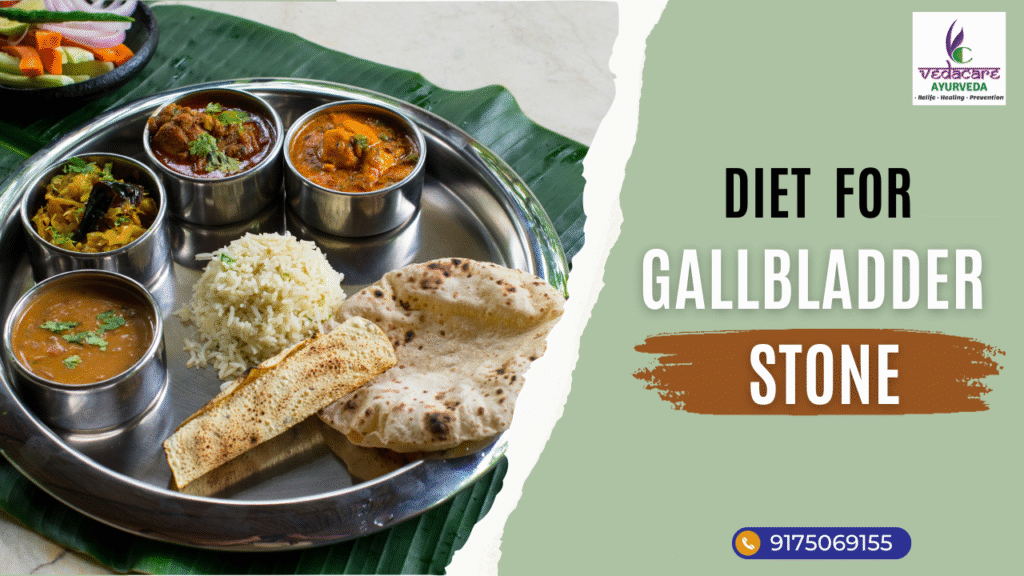
What Is the Best Ayurvedic Diet for Gallstones?
Ayurvedic Dietary Principles- The goal is to pacify Pitta and Kapha, enhance Agni (digestion), and promote bile flow while avoiding foods that aggravate stone formation.
Recommended Foods:
- It is important to eat on time in this disorder. To reduce appetite and nausea, it is beneficial to take a mixture of ginger-lemon juice and Saindhav (rock salt) before a meal.
- Light, Bitter, and Astringent Foods: Bitter greens (kale, dandelion), cucumber, bitter gourd, and turmeric to reduce Pitta and detoxify the liver.
- Whole Grains: Barley, quinoa, and millets, which are easy to digest and balance Kapha.
- Low-Fat Foods: Avoid heavy fats; use small amounts of ghee or olive oil for their liver-supporting properties.
- Fruits: Pomegranate, Apples, Pears, Sapota, Papaya, Sweet Orange, Sweet Citrus, and SmallBanana.
- Vegetables: Steamed broccoli, zucchini, and leafy greens to support digestion.
- Herbs and Spices: Turmeric, coriander, cumin, and fennel to stimulate bile flow and reduce inflammation.
- Hydration: Warm water, herbal teas (e.g., dandelion root, chamomile) to flush toxins and support liver function.
- Use boiled drinking water.
- The amount of oil-ghee in the meal (in cooking) should be in the right proportion so that it is moderately oily for frying, a little Desi ghee on the rice (this should be homemade ghee with butter).
- Exercise regularly: Go for an hour’s walk each day. Yoga poses such as Bhujangasana, Dhanurasana, Paschimottanasana, Sarvangasana, and Shalabhasana are highly beneficial for this condition.
Common Questions About Gallstones
Can Ayurveda actually dissolve gallbladder stones?
Ayurvedic treatment utilizes specific herbs like Sharpunkha and Kutki, which are traditionally known for their litholytic properties. These customized formulations aim to support the body’s natural ability to break down stones and improve the bile solubility index. This process helps in gradually reducing cholesterol-based stones into a slurry that can be eliminated naturally, provided the gallbladder function is preserved.
Is surgery mandatory for all cases of gallstones?
Not necessarily. While modern medicine often suggests a cholecystectomy (gallbladder removal) as a primary solution, Ayurveda offers a non-surgical alternative for asymptomatic stones or chronic management. However, surgery may be necessary in emergency cases involving bile duct obstruction or severe infection.
How long does the Ayurvedic treatment take to show results?
Because gallstones are dense structures, natural dissolution is a gradual process. Typically, a clinical protocol spans 4 to 6 months. Progress is monitored via periodic ultrasounds to track the reduction in stone size and number.
What is the maximum stone size that can be treated non-surgically?
Ayurvedic management has shown positive results as a non-surgical alternative for suitable candidates with various stone sizes and biliary sludge. For stones larger than 25mm, a detailed clinical evaluation by doctor is required to ensure there is no immediate risk of bile duct blockage.
Can gallstones recur after Ayurvedic treatment?
Ayurvedic therapies, combined with the right dietary changes, may help reduce the risk of recurrence by addressing the underlying Pitta-Kapha imbalances. Unlike surgery, which removes the organ but not the metabolic tendency to form stones, Ayurveda uses Virechan and diet to ensure the liver produces healthy, non-lithogenic bile.
Are there any side effects of Ayurvedic gallbladder medicines?
When prescribed and monitored by a qualified Ayurvedic physician, these herbo-mineral formulations generally well tolerated when prescribed appropriately. Unlike some modern bile acids, they act as hepatoprotectives to support liver health and digestion without causing chronic diarrhea or stomach upset.
What are the key dietary restrictions during treatment?
Patients must avoid “Pitta-aggravating” foods such as deep-fried items, excessive chilies, fermented foods, and heavy dairy (cheese/sour curd). A diet rich in bitter vegetables and warm, easy-to-digest grains is recommended to stimulate natural bile flow
Where can I get specialized gallstone treatment in Pune?
You can visit Vedacare Ayurved in Aundh, Pune, led by Dr. Harshal Nemade. We specialize in non-surgical Pittashmari management for patients across Pune, including Baner, Pashan, and Pimpri-Chinchwad.
Foods to Avoid:
- Pitta-Aggravating Foods: Spicy, fried, oily, or acidic foods (e.g., chilies, tomatoes, vinegar).
- Kapha-Aggravating Foods: Heavy, sweet, or fatty foods (e.g., cheese, red meat, processed foods).
- It is better to avoid chili, sour curd, cheese, and peanuts, cabbage, cauliflower, tamarind, tomato, pineapple, fermented foods.
- Do not eat fried foods or fast food. Avoid Foods like Namkin, wafers, Vada pav.
- Avoid foods with artificial colors, chemical preservatives.
- Cold Foods: Ice-cold drinks or foods that dampen Agni.
- Alcohol and Caffeine: These irritate the liver and gallbladder.
Read more about diet for gallstones here
Note: Eat smaller, frequent meals to avoid overloading the gallbladder.
Why Not Delay the Gallstone Treatment?
Delaying gallstone treatment can lead to severe complications:
- For instance, smaller stones have a higher tendency to slip into bile ducts, frequently causing pancreatitis or jaundice. Larger stones can block the neck of the gallbladder and are known to increase the risk of gallbladder cancer.
- Larger stones are known to increase the chance of developing gallbladder cancer and can block the neck of the gallbladder.
- Acute Cholecystitis
- Jaundice \ Cholangitis \ Sepsis
- Gallbladder cancer, Gallbladder inflammation
Removing the gallbladder is not the only solution. Ayurveda offers a natural, sustainable, and personalized path to healing gallstones. By addressing the root cause, regulating digestion, and detoxifying the liver and gallbladder, you can avoid surgery and preserve your health.
Ayurvedic treatment for gallbladder stones offers a safe, effective, and natural alternative to surgery. By addressing the root cause through herbs, diet, and Panchakarma, Ayurveda dissolves stone, preserves gallbladder function, and prevents recurrence. While it requires patience, the holistic approach ensures lasting health benefits.
Ayurveda doesn’t just treat the disease; it treats the individual as a whole.
Why Choose Vedacare for Gallstone Treatment in Pune?
We specialize in treating Pittashmari caused by the high-fat and spicy dietary triggers common in the focusing on dietary habits unique to the Pune region lifestyle.
Led by Dr. Harshal Nemade, an expert with nearly two decades of experience in clinical Ayurveda.
Non-Invasive: Our goal is to avoid surgery through root-cause healing.
We have successfully managed complex Pittashmari cases for hundreds of patients across Aundh, Baner, Pashan, and Pimpri-Chinchwad, focusing on the specific dietary triggers common in the Pune lifestyle.
Clinical observations commonly seen during gallstone management
When managing gallstones with Ayurvedic treatment at vedacare, patients typically observe several clinical improvements as their bile solubility and overall digestive function are restored. Here are the most common clinical observations:
- Reduced bloating: A significant decrease in post-prandial (after-meal) bloating, which is commonly caused by sluggish fat digestion.
- Improved digestion: Patients note that meals no longer trigger the uncomfortable sense of fullness, acid reflux, acidity or trapped gas they previously experienced.
- Reduced heaviness: The chronic sensation of heaviness or dull ache in the right upper abdomen gradually diminishes as bile flow normalizes and inflammation subsides.
- Fewer pain episodes: As the bile’s lithogenic index improves and stones potentially soften or reduce in size, patients experience far fewer acute pain episodes or biliary colic attacks due to reduced swelling, indicating stabilized gallbladder health and a lower risk of duct blockages.
Summary of Ayurvedic Treatment for Gallstones
Ayurveda treats gallstones by improving digestion, balancing doshas, detoxifying the liver, and promoting bile flow using herbs, Panchakarma, and diet changes.
Always consult a qualified Ayurvedic practitioner to tailor treatments to your unique constitution. With patience and discipline, you can achieve lasting relief and optimal health.
Contact Our Aundh, Pune Clinic Today
Address: Office No-1, First Floor, Sahil Apartment, Parihar Chowk, Near Westend Mall, ITI Rd, Sindh Society, Ward No. 8, Sadhu Vasvani Nagar, Aundh, Pune, Maharashtra-411067
Call: 9175069155
Consultation: Available Mon-Sat (Morning & Evening)
About Dr. Harshal Nemade
Dr. Harshal Nemade (BAMS,MDAM,ADYA) is a leading Ayurvedic Physician and Panchakarma Specialist in Pune with over 18 years of clinical experience. He specializes in the non-surgical management of Pittashmari (Gallstones) and chronic digestive disorders at Vedacare Ayurved.